Reading Group Roundup: May 2026
This month the focus is on some classic books – ones that have stood the test of time and can still grip us. They can be challenging but PRG groups tackle them with gusto and the result is great discussion.
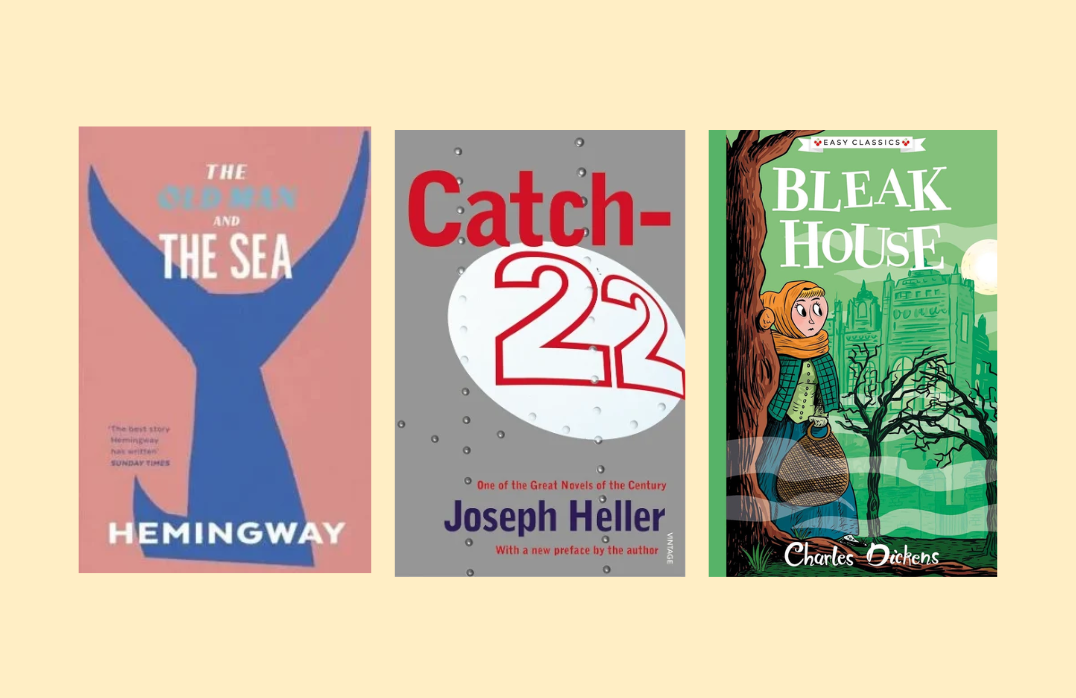
Ernest Hemingway’s The Old Man and the Sea was first published in 1952. It’s a very short novel set in the waters off the coast of Havana and tells the story of an old man, a young boy and a fish. It’s an epic struggle between the dying fisherman and a giant marlin but it’s also about much more: loneliness and longing, the power of human connection, and an unbreakable bond with nature.
Both groups at Rye Hill read it and as always different views made for zinging book talk. For some it was too short:
‘I’ve started looking at books as if I can eat them. This one was just a snack’.
But others liked it all the more because of the brevity:
‘I thought it was a Goldilocks book, just the right length for me, like a film shot in one scene’.
There was lots of debate about the central theme: ‘It was his determination, the endurance of the human spirit’; ‘The sharks circle when you’re at your weakest but you build yourself back up and go out again’.
‘I read it all, I read it again a week later and last night I read it again’.
At Rochester the group took on Joseph Heller’s Catch-22, first published in 1961. The book is set in the closing months of the Second World War and centres on Yossarian, a bombardier who discovers that his real enemy is his own military masters and their combination of cunning, incompetence and corruption, all summed up in the Catch-22 trap. His superiors keep increasing the number of missions the men must fly to complete their service. Flying is suicidal madness. To be excused Yossarian has to plead insanity but if he does, they’ll know he must be sane so will make him to keep flying.
‘Just because you’re paranoid doesn’t mean they aren’t after you.’
The tone of the book shifts between hilarity and the horror of war. It’s also a hefty read but the group took it on and had a great time talking about it. Views were mixed but everyone agreed about the echoes of Catch-22 in prisons. There were lots of examples including cell door name cards with negatives given for using them and not using them as ID…
PRG groups also prove the classics can be for everyone. The Whatton group is part of PRG’s Reading the Way initiative which is aimed at less experienced readers who want more practice and support to build confidence and reading pleasure. At Whatton they took on an abridged version of Charles Dickens’ Bleak House, first published in 1853. It’s a challenging novel that explores and exposes the corruption of Victorian England as Dickens saw it. At the centre is a hugely tangled legal case with tentacles that spread across society and involve lost children, blackmail and murder. The cast of characters includes wealthy aristocrats, sinister lawyers, homeless and starving street children and an orphaned heroine.
‘The one great principle of law is to make business for itself.’
The Whatton group reads the chosen book together over a number of sessions. When they finished Bleak House they agreed it had been hard but worth it and they are now keen to try another Dickens novel. A great moment came when a member who hadn’t wanted to read aloud at earlier meetings decided to have a go at the last Bleak House session. He read a section with the help of a mentor and was rightly proud of his achievement.
Prison Reading Groups (PRG) was created in 1999 to set up, support and fund informal reading groups in prisons. We currently support more than 75 groups in over 50 prisons nationwide. If you’re interested, check with your library to see if there’s a group in your prison. PRG is part of registered charity Give a Book.